
Google AI-Überblicke und SEO-Auswirkungen: Was Bootstrapped-Gründer wissen müssen
Warum Ihr organischer Traffic gerade abgestürzt ist (und es ist keine Strafe)
Sie melden sich Montagmorgens in der Google Search Console an. Impressionen steigen. Klicks fallen. Es gibt keine Algorithmus-Ankündigung, keine manuelle Maßnahme, kein technisches Problem, das Ihr Entwickler finden könnte. Was Sie sehen, ist die Google AI Overview SEO-Auswirkung, die in Ihren Analysen auftaucht — und es ist die größte Verschiebung im organischen Suchverhalten seit dem Mobile-First-Indexing.
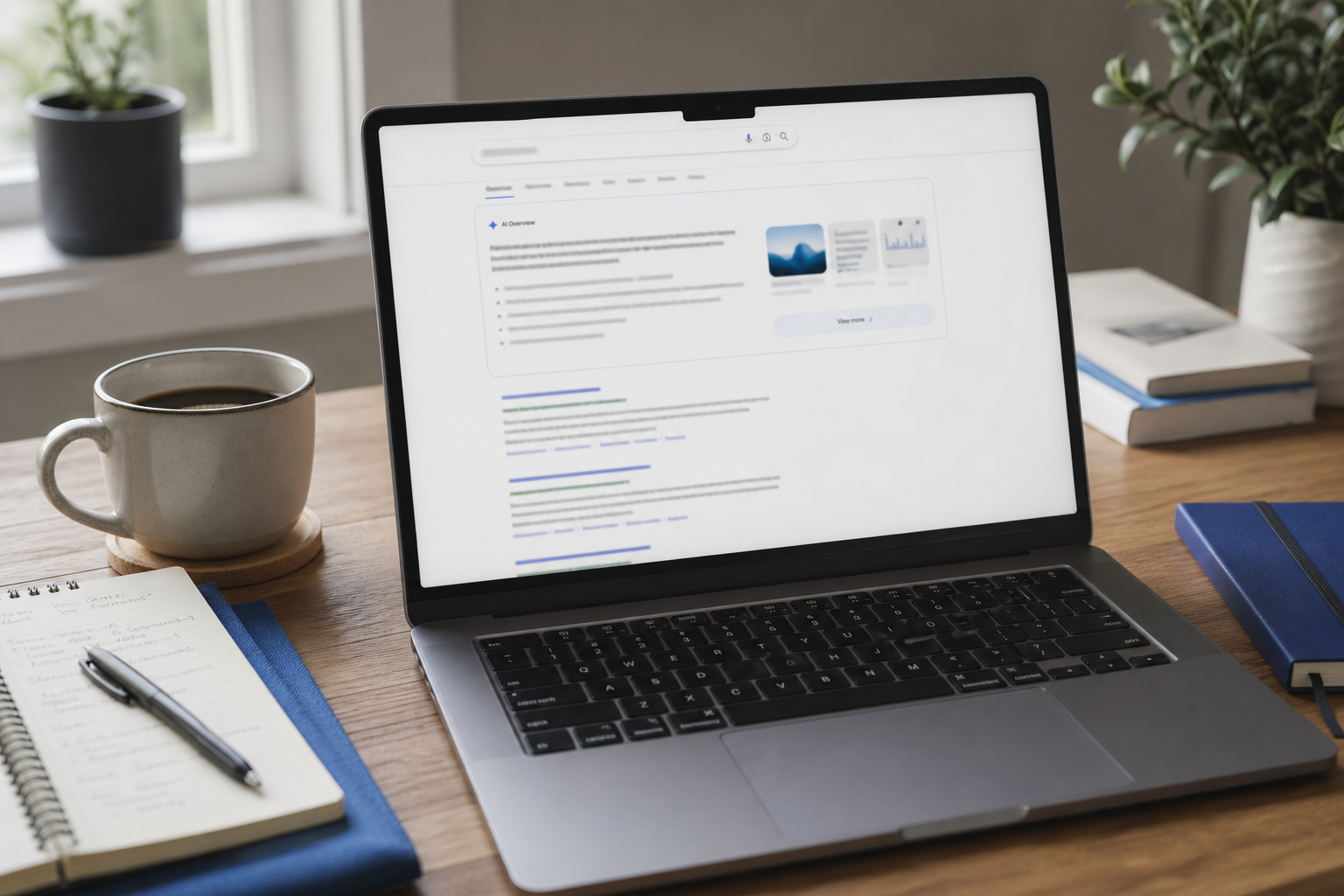
AI Overviews sind KI-generierte Zusammenfassungen, die über traditionellen Ergebnissen angezeigt werden und Antworten von mehreren maßgeblichen Quellen zusammenfassen, laut MBE Group. Im Gegensatz zu Featured Snippets, die nur von einer Seite gezogen werden, aggregieren AI Overviews von vielen — was bedeutet, dass selbst ein #1-Ranking komplett umgangen werden kann, während Ihr Content die Antwort noch immer speist.
Hier ist die Zahl, die auf dem Whiteboard jedes Gründers stehen sollte: Ahrefs analysierte 300.000 Keywords und fand einen 34,5%igen CTR-Rückgang für die #1-Position, wenn ein AI Overview vorhanden ist, laut Search Engine Land. Der Schaden verschärft sich, wenn AI Overviews zusammen mit Featured Snippets erscheinen — Amsives Studie mit 700.000 Keywords verzeichnete Verluste von bis zu 37,04% bei diesem Layout. Das ist die echte Google AI Overview SEO-Auswirkung, die die meisten Blogs immer noch vortäuschen, dass sie nicht passiert.
Das ist keine Google-Strafe. Es ist kein schlechter Content. Es ist keine vorübergehende Algorithmus-Fluktuation. Es ist eine permanente Verschiebung in der Art und Weise, wie Suchergebnisse Antworten anzeigen, und die Unternehmen, die SEO immer noch wie 2022 behandeln, sehen ihre Funnels zusammenbrechen, während Konkurrenten, die sich angepasst haben, die neue Sichtbarkeitsfläche erfassen.
Ihr organischer Traffic ist nicht verschwunden, weil Google ihn nicht mehr sendet. Er ist verschwunden, weil Google die Frage auf der Suchergebnisseite selbst beantwortet.
Inhaltsverzeichnis
- Was Ranking #1 bedeutet, wenn Google vorher antwortet
- Die Content-Typen, die im AI-Overview-Zeitalter immer noch Klicks verdienen
- Warum mehr Veröffentlichungen — nicht bessere — jetzt das Autorität-Rennen gewinnen
- Wo Klicks immer noch passieren: Ein Triage-Framework für jeden Query-Typ
- Wie Sie Content strukturieren, damit AI Overviews Sie zitieren statt Sie zu überspringen
- Die Mathematik, die Bootstrapped-Gründer zur Automatisierung treibt
- Ihr 90-Tage-Playbook zur Rückgewinnung von Traffic, der durch AI Overviews verloren ging
Was Ranking #1 bedeutet, wenn Google vorher antwortet
Über zwei Jahrzehnte war Ranking #1 das unmissverständliche Ziel der SEO. Sie optimierten, bauten Links auf, warteten, und wenn Ihre URL die Spitze der SERP erreichte, folgten die Klicks in vorhersehbaren Prozentsätzen. Dieser Vertrag ist gebrochen. AI Overviews haben nicht nur die Benutzer-Erfahrung verändert — sie haben die Mechanik dessen, was ein Top-Ranking wert ist, umgeschrieben.
Beginnen Sie mit dem, was AI Overviews tatsächlich anzeigen. Sie sind mehrquellen-Zusammenfassungs-Blöcke oben auf der SERP, die Sätze und Daten von mehreren Seiten ziehen, wie Streamworks und MBE Group beide dokumentieren. Im Gegensatz zu einem Featured Snippet — eine Quelle, genauer Text, mit direktem Link — mischen AI Overviews Content von 3 bis 8 Quellen und verlinken auf jede als unterstützende Zitate. Ihr Satz kann in der Box erscheinen. Ihre URL kann darunter als Fußnoten-ähnliches Zitat sitzen. Aber der Benutzer hat die Antwort bereits gelesen.
Das ist der Grund, warum ein #1-Ranking keinen Klick mehr garantiert. Der Ahrefs-Datensatz, der einen 34,5%igen CTR-Rückgang an Position #1 zeigt, wenn ein AI Overview erscheint, wird durch Amsives breitere Feststellung gestützt: ein durchschnittlicher 15,49%iger CTR-Rückgang über die gesamte SERP hinweg, wenn Overviews vorhanden sind, und steigt auf rund 37%, wenn AI Overviews zusammen mit Featured Snippets existieren. Das sind keine isolierten Anomalien. Sie sind der Richtungskonsens aus über einer Million analysierten Keywords.
Die Query-Typ-Segmentierung ist dort, wo der Schaden ungleichmäßig wird. Ahrefs fand, dass 99,2% der Keywords, wo AI Overviews erscheinen, informative Absicht haben, wie von Search Engine Land berichtet. Markengerichtete Suchen triggern AI Overviews nur 4,79% der Zeit, und wenn sie es tun, steigt die Marken-CTR tatsächlich um 18,68%, weil Benutzer bereits darauf vorbereitet sind, auf die Marke zu klicken, die sie erkennen. Informations-Publisher werden erdrückt. Markensuchen-getriebene Unternehmen bleiben isoliert. Der mittlere Boden existiert kaum.

Diese Asymmetrie trifft Bootstrapped-Gründer härter als jeden anderen. Agenturen und Enterprise-SEO-Teams hatten einen Puffer — mehrere Content-Säulen, bezahlte Budgets, Markenkenntnis, die den Schock absorbierten. Ein Einzelunternehmer, das seinen gesamten Funnel auf informatives Top-of-Funnel-Content gebaut hat, hat nichts, worauf es sich verlassen kann. Der Blog-Post, der für „wie man X macht" auf Platz 1 rankte, war die gesamte Pipeline. Jetzt rankt er immer noch, verdient immer noch Impressionen, und sendet ungefähr zwei Drittel des Traffic, den er vor achtzehn Monaten bekam.
Dann gibt es die widersprüchliche Erzählung von Google selbst. Die offizielle Position der Google-Führung, paraphrasiert über Press-Coverage und Google-I/O-Sessions, ist, dass AI Overviews „höherwertige Klicks" ermöglichen und Benutzer mit einer breiteren Palette von Web-Content verbinden. Search Engine Lands Analyse der Ahrefs- und Amsive-Daten widersprechen dem direktekt — Gesamtklicks sinken, und viele hochranking-Seiten sind vollständig aus Overviews ausgeschlossen. Beide Datensätze stammen von Anbietern (Ahrefs ist ein SEO-Tool-Anbieter; Amsive ist eine Performance-Marketing-Agentur), also haben die Daten ihren eigenen kommerziellen Rahmen. Aber wenn zwei unabhängige Anbieter-Studien, die über 1 Million Keywords abdecken, die Richtung und Größenordnung überein, ist die Richtungseinstufung zuverlässig, auch wenn sich die genauen Prozentsätze verschieben.
Der strategische Umdenk ist einfach, aber unangenehm. Ranking ist nicht mehr das Ziel. Zitierung im Overview plus Ranking ist das Ziel. Dies sind jetzt zwei separate Optimierungsprobleme mit unterschiedlichen Signal-Anforderungen, unterschiedlichen Content-Strukturen und unterschiedlichen Erfolgs-Metriken. Wenn Sie einen gewinnenden Content-Engine bauen möchten, müssen Sie für beide Oberflächen gleichzeitig optimieren — weil das Gewinnen von einer bei Verlust der anderen Sie immer noch den Klick kostet.
Die Content-Typen, die im AI-Overview-Zeitalter immer noch Klicks verdienen
Nicht alle Content ist gleich AI-Overview-Kanibalisierung ausgesetzt. Die Query-Absicht hinter Ihrem Content bestimmt, ob AI Overviews Ihren Traffic ganz aufzehren oder Sie völlig in Ruhe lassen. Bevor Sie in Panik Ihren gesamten Blog umschreiben, müssen Sie wissen, welche Posts in der Schadenszone sind und welche in der sicheren Spur sitzen.
| Content-Typ | AI-Overview-Trigger-Rate | Typische CTR-Auswirkung | Warum das passiert |
|---|---|---|---|
| Informative How-To-Leitfäden | Hoch (informative Absicht dominiert) | -15% bis -34% CTR | Mehrquellen-Synthese zieht ohne Click zu senden |
| Einzelmarken-Produktbewertungen | Niedrige Trigger, niedrige Zitierung | Minimaler direkter Verlust, niedriges Aufwärtspotenzial | Overviews bevorzugen nicht-werbliche Quellen |
| Lokale Service-Seiten | Sehr niedrig | Stabil | Lokale Absicht triggert selten Overview |
| Transaktional („Kaufen Sie X") Seiten | Sehr niedrig | Stabil | Kommerzielle Queries triggern selten Overviews |
| Datengestützte Forschungs-Posts | Hohe Trigger, hohe Zitierung | -15% bis -27% CTR, hohe Zitierungsrate | Original-Statistiken sind hochgradig extrahierbar |
| Marken-Queries | 4,79% Trigger-Rate | +18,68% CTR bei Auslösung | Benutzer-Absicht ist bereits marken-vorbereitet |
How-To-Leitfäden sind der komplexeste Fall. Sie werden immer noch in AI Overviews zitiert, weil sie sauber zum Multi-Quellen-Synthese-Muster passen, aber sie verlieren gleichzeitig direkte Klicks. Der Trade-off: Brand-Exposure im Overview-Feld versus die verlorene Session und die Konversion, die damit kam. Für einen Publisher, der sich über Anzeigen oder Affiliate-Links monetarisiert, ist Zitierung ohne Klick fast wertlos. Für eine Marke, die Erkenntnisse aufbaut, hat Zitierung allein einen gewissen Compound-Wert. Wie auch immer, How-To-Content mit einem AI-Bullet-Point-Generator-Ansatz strukturieren — kurz, extrahierbar, scannbar — ist der einzige Weg, um das Verbleibende zu maximieren.
Einzelmarken-Produktbewertungen sind das am schlechtesten positionierte Format in der gesamten SEO-Wirtschaft im Moment. AI Overviews neigen zu Mehrquellen-, nicht-werblichen Inhalten, laut Streamworks. Ein einzelner „Warum unser X das beste ist" Post wird fast nie zitiert, und weil die Query, die ihn triggert, zunehmend von einem vergleichenden Overview beantwortet wird, verliert der Post auf beiden Seiten. Wenn ein wesentlicher Anteil Ihres Contents Einzelmarken-Werbung ist, verlieren Sie nicht nur Traffic — Sie verlieren das Format selbst.
Lokaler Service-Content ist der sichere Hafen. Queries wie „Klempner in meiner Nähe" oder „bester Zahnarzt in München" triggern selten AI Overviews überhaupt, wie sowohl Reusser als auch WSI bestätigen. Lokale Absicht wird überwiegend von der Map Pack und traditionellen blauen Links bedient. Wenn Sie ein lokales Service-Unternehmen betreiben, betrifft die AI-Overview-Ära Sie kaum — und das ist ein struktureller Vorteil, auf den man verdoppeln sollte.
Transaktionale Queries — „Kaufen Sie X", „X Preisgestaltung", „X Demo" — bleiben stabil aus demselben Grund. Kommerzielle Absicht wird durch eine Mehrquellen-Zusammenfassung schlecht bedient. Benutzer wollen vergleichen, klicken und kaufen. Overviews erscheinen fast nie auf diesen Queries, und wenn sie es tun, stimmt das CTR-Muster mit Marken-Queries überein: Benutzer gehen über sie hinaus zum kommerziellen Ergebnis, auf das sie ohnehin zusteuern.
Datengestützte Posts mit ursprünglichen Statistiken nehmen einen einzigartigen Platz ein. Sie werden überproportional in Overviews zitiert, weil sie extrahierbare, zurechenbare Fakten bieten — genau das, was die KI-Synthese-Schicht will. Der CTR-Verlust ist real, aber die Zitierungsrate ist hoch, was bedeutet, dass die Markenerwähnungsfrequenz steigt, selbst wenn Klicks fallen. Für Thought-Leadership-getriebene Unternehmen kann das ein Nettogewinn sein. Für Traffic-monetarisierte Publisher ist es immer noch ein Verlust.
Die Implikation für Bootstrapped-Publisher ist direkt: Wenn Ihre Content-Portfolio zu 80% informatives Top-of-Funnel ist, sind Sie in der höchsten Impact-Schadenszone und müssen jetzt umgestalten. Wenn es zu 80% transaktional plus lokal ist, sind Sie isoliert und sollten aggressiv expandieren, bevor Konkurrenten die gleiche Mathematik erkennen.
Warum mehr Veröffentlichungen — nicht bessere — jetzt das Autorität-Rennen gewinnen
Das alte SEO-Playbook sagte, dass ein perfekter 3.000-Wort-Pillar-Post zehn mittelmäßige 800-Wort-Artikel überranken würde. Das war wahr, wenn Ranking ein eindimensionales Wettbewerb zwischen einer einzelnen URL und einem einzigen SERP-Slot war. AI Overviews kehrten die Gleichung um. Jetzt ist der Wettbewerb zwischen Domains, nicht URLs, und die Metrik ist nicht Ranking — es ist Zitierungsfrequenz über einen ganzen topischen Cluster.
Hier ist, wie AI Overviews Quellen auswählen. Laut MBE Group und WSI verwenden Googles KI-Systeme E-E-A-T-Signale — Erfahrung, Expertise, Autorität, Vertrauenswürdigkeit — um auszuwählen, welcher Content zitiert wird. Domains mit breiter topischer Abdeckung über ein Thema werden viel häufiger zitiert als Domains mit einem exzellenten Post. Das System strebt nach Breite als Proxy für Tiefe. Eine Website mit 20 Posts zu „B2B-E-Mail-Outreach" sieht für die KI-Synthese-Schicht autoritärer aus als eine Website mit 1 brillantem Post zum gleichen Thema, selbst wenn der brillante Post objektiv besser geschrieben ist.
Das ist der Grund, warum ein einzelner perfekter Artikel nicht mehr ausreicht. AI Overviews sampeln aus mehreren Quellen pro Query. Wenn eine Domain 1 Post zu „B2B-E-Mail-Outreach" hat und ein Konkurrent 12 Posts mit 12 verwandten Winkeln abdeckt — Cold-Email-Subject-Lines, Follow-Up-Cadences, Zustellbarkeitsfixes, Response-Rate-Benchmarks, List-Building-Taktiken — wird der Konkurrent über mehr Queries in Overview-Zitationen erscheinen. Das setzt sich durch. Jedes Zitat verstärkt das Autoritäts-Signal, das die Zitierungswahrscheinlichkeit bei der nächsten Query erhöht, die sich wiederum setzt durch.
Das Publikations-Cadence-Problem folgt direkt. MBE Group, Reusser und WSI konvergieren alle auf den gleichen Standard: „konsistente, laufende Veröffentlichungen rund um topische Cluster" schlagen isolierte Hero-Posts. Keiner von ihnen gibt eine genaue Zahl, also machen wir die praktische Implikation explizit. Wöchentliche Cadence ist der Boden. Drei bis fünf Posts pro Woche sind konkurrenzfähig. Täglich ist das neue Autoritäts-Signal, das sich Konkurrenten, die auf wöchentlich feststecken, abheben.
Die Mathematik ist das, was Bootstrapped-Gründer fängt. Ein Solo-Gründer, der einen Post pro Woche schreibt, produziert 52 Posts pro Jahr. Ein Agentur-unterstützter Konkurrent, der fünfmal pro Woche veröffentlicht, produziert 260 Posts pro Jahr. Fünf Jahre Solo-Arbeit entspricht einem Jahr Agentur-Output. Und weil Autorität setzt sich durch, schließt sich diese Lücke nicht — sie verbreitert sich. Das ist der strukturelle Nachteil, den AI Overviews schafften und dass keine Menge „schreib besseren Content" Rat beheben wird. Ein Solo-Unternehmer, der sich darauf verpflichtete, eine konsistente Marken-Erzählung über Cluster-Content zu erzählen, braucht immer noch, dass der Cluster existiert.
Im AI-Overview-Zeitalter konkurrieren Sie nicht mehr um Rankings. Sie konkurrieren um topische Autorität, und topische Autorität wird durch Volumen, Konsistenz und Breite aufgebaut.
Hier ist die praktische Aktionsschicht:
- Überprüfen Sie Ihre topische Präsenz. Zählen Sie, wie viele veröffentlichte Posts Ihre Top-3-kommerziellen Themen abdecken. Wenn ein Thema weniger als 8 Posts hat, sind Sie unter der Zitierungs-Dichte-Schwelle, auf die Konkurrenten treffen.
- Kartieren Sie die Cluster-Lücken. Für jedes Pillar-Thema listen Sie die 10–15 unterstützenden Sub-Themen auf, die Ihre Konkurrenten abdecken, die Sie nicht haben. Das sind Ihre AI-Overview-Zitierungschancen, die ungekündigt sitzen.
- Setzen Sie eine nicht verhandelbare Publikations-Cadence. Minimum 3 Posts pro Woche zum Signal aktiver topischer Autorität. Täglich ist die konkurrenzfähige Obergrenze, und es ist die Ebene, wo Solo-Betreiber wirklich voraus sein können.
- Bauen Sie für Zitierungs-Extrahierbarkeit. Jeder Post braucht eine direkte Antwort in den ersten 100 Wörtern, beschreibende H2/H3-Struktur, Bullet-Listen für prozeduralen Content und mindestens eine zitierte Statistik mit Zurechnung.
- Folgen Sie Overview-Zitierungen, nicht nur Rankings. Verwenden Sie SERP-Überwachung, um zu markieren, welche Queries Overviews triggern und ob Ihre Domain als zitierte Quelle erscheint. Ranking ohne Zitierung ist Halb-Anerkennung. Zitierung ohne Ranking ist immer noch bedeutungsvolle Brand-Exposition.
Wo Klicks immer noch passieren: Ein Triage-Framework für jeden Query-Typ
Morgen früh müssen Sie entscheiden, für welche Keywords Sie noch kämpfen, welche neu optimieren und welche völlig aufgeben. Die Daten sind klar genug, dass das keine Vermutung ist — es ist eine Triage-Entscheidung, die Sie in einem Nachmittag machen können, wenn Sie das Framework haben. Hier ist es.
| Query-Absicht | AI-Overview-Trigger-Rate | Dokumentierte CTR-Änderung | Empfohlen Aktion |
|---|---|---|---|
| Informativ / nicht-markengerichtet | ~99% der AI-Overview-Keywords | -19,98% (Amsive) | Für In-Overview-Zitierung umgestalten; Volumen-Anteil reduzieren |
| Marke / Navigational | 4,79% Trigger | +18,68% bei Trigger | Schützen und erweitern — hochwertiger Asset |
| Transaktional („Kaufen", „Preis") | Niedrig | Stabil | Investitionsanteil erhöhen |
| Lokal („in meiner Nähe", Geo) | Minimal | Stabil | Standortseiten bewahren und erweitern |
| Vergleich („X vs Y", „Best") | Anstieg | Variabel | Mit Datentabellen und Spezifika neu optimieren |
Informative und nicht-markengerichtete Queries sind dort, wo die Blutung am schlimmsten ist. Die 99,2%ige AI-Overview-Überlappung mit informativer Absicht ist kein Tippfehler oder ein Sampling-Artefakt — es ist das strukturelle Design des Features. Google hat AI Overviews speziell gebaut, um informative Queries auf der SERP zu beantworten. Der dokumentierte -19,98%ige CTR-Rückgang bei nicht-markengerichteten Keywords von Amsive ist die praktische Konsequenz. Die Strategie hier ist nicht, informativen Content aufzugeben, weil er immer noch Brand-Exposition und topische Autorität fährt. Die Strategie ist, für Zitierung im Overview zu schreiben, nicht für direkten Click-Erfassung. Unterschiedliches Ziel, unterschiedliche Erfolgs-Metrik, unterschiedliche Struktur.
Marken- und Navigations-Queries sind die Asset-Klasse, die um jeden Preis zu schützen ist. Mit einer 4,79%igen Trigger-Rate und einem 18,68%igen CTR-Boost, wenn Overviews doch erscheinen, wird Marken-Traffic die eine Query-Typ, auf die AI Overviews aktiv verbessern. Das ist auch, wo die Marken-Aufbau-Arbeit des Bootstrapped-Gründers sich kompoundierend auszahlt. Jeder Podcast-Auftritt, jeder Gründer-LinkedIn-Post, jede Newsletter-Erwähnung, die eine Markensuche fährt, wird im AI-Overview-Zeitalter wertvoller als zuvor. Marke ist nicht mehr sanfte Marketing — es ist SEO-Rüstung.
Transaktionale Queries — „Kaufen", „Preis", „Demo", „Registrieren" — bleiben stabil, weil kommerzielle Absicht durch eine Zusammenfassung-Box schlecht bedient wird. Laut MBE Group, Reusser und WSI triggern diese Queries selten Overviews und traditionelle Blue-Link-CTR hält. Für Bootstrapped-Budgets ist das, wo Investitionen sich schnellsten setzt durch. Eine Produktvergleich-Seite oder eine Preisseite, die jetzt gut rankt, wird gut ranken und weiterhin konvertieren, unberührt von der KI-Synthese-Schicht.
Nicht all Traffic wird durch AI Overviews verloren. Es wird umgeleitet, und Ihre Aufgabe ist es, zu erkennen, welche Query-Typen immer noch lohnend sind und welche vollständig aufzugeben sind.
Lokale Absicht („in meiner Nähe", city-spezifische Service-Queries) ist die sicherste Kategorie in der gesamten SEO-Landschaft jetzt. Beide Reusser und WSI dokumentieren minimale Overview-Auswirkung auf lokale Queries. Die Map Pack dominiert immer noch. Service-Area-Unternehmen, lokale Einzelhandelsbetriebe, regionale B2B-Betreiber — alle von euch sitzen in den ruhigsten Gewässern der gesamten SERP. Bewahren Sie, was Sie haben, und expandieren Sie aggressiv mit neuen Standortseiten, nachbarschafts-spezifischen Content und geo-zielgerichteten Service-Beschreibungen.
Vergleich-Queries — „X vs Y", „beste X für Y", „X-Alternativen" — sind der Wildcard. AI Overviews erscheinen zunehmend hier, Vergleichszusammenfassungen von mehreren Quellen ziehend. Die Strategie ist Neuoptimierung für Zitierung: ausführliche Vergleichstabellen mit Spezifikationen, Preisreihen, Feature-Häkchen und explizite Datenpunkte, die die KI-Extraktions-Schicht sauber ziehen kann. Ein vager Absatz mit „Produkt A ist besser für kleine Teams" wird ignoriert. Eine Tabelle mit fünf konkreten Datenzeilen wird zitiert.
Für den Bootstrapped-Gründer, der ein Editorial-Kalender rebalanciert, zeigt die Mathematik eine Richtung. Verschieben Sie ungefähr 40% der informativen Content-Investition zu transaktionalen und lokalen Content, wo CTR stabil bleibt und wo derselbe Publishing-Aufwand messbar mehr Umsatz produziert. Neuer informativen Content vollständig nicht aufgeben. Es ist immer noch der topische Autoritäts-Brennstoff, der Sie über den Cluster zitiert verdient. Aber hören Sie auf zu erwarten, dass es das gleiche Click-Volumen fährt, das es 2022 gemacht hat. Diese Ära ist vorbei.
Wie Sie Content strukturieren, damit AI Overviews Sie zitieren statt Sie zu überspringen
Wenn informativer Content unabhängig davon, was Sie tun, direkte Klicks verlieren wird, ist Ihr bleibendes Hebel Zitierungsfrequenz. Posts, die in Overviews zitiert werden, verdienen immer noch Brand-Exposition, Zurechnung-Links und das sekundäre Vertrauens-Signal, das über den Cluster setzt sich durch. Posts, die nicht zitiert werden, verdienen nichts. Die Struktur-Regeln unten bestimmen, welche Seite dieser Linie Ihr Content landet.
Die Erste-100-Wörter-Regel. AI-Overview-Extraktion bevorzugt Content, der die Kern-Query in der Öffnung beantwortet. Wie ein Praktiker es in einer Streamworks-zitierten Diskussion ausdrückte, wird Google „die prägnanteste, wertvollste Antwort auf eine Frage nehmen und das ist das, was sie zitieren werden." Jeder Post sollte mit einer 1-2-Satz-direkten Antwort eröffnen, bevor irgendein Narrativ-Setup. Sparen Sie das Storytelling für den Körper. Leiten Sie mit der Antwort.
Heading-Architektur für Extraktion. MBE Group betont beschreibende H2/H3-Struktur als Kern-Ranking-Signal im Overview-Zeitalter. Jeder Heading sollte als spezifische Frage oder Behauptung formuliert sein, nicht ein vages Thema-Label. Ersetzen Sie „Vorteile" mit „Warum AI Overviews CTR um 34,5% an Position #1 reduzieren." Ersetzen Sie „Best Practices" mit „Die fünf strukturellen Regeln, die Zitierungs-Wahrscheinlichkeit erhöhen." Die KI-Extraktions-Schicht liest Headings als topische Karten. Vage Headings werden übersprungen.
Bullet-Listen und strukturierte Daten. Sowohl MBE Group als auch WSI bestätigen, dass Bullet-Point-Schritte für How-To-Content von AI Overviews zuverlässig extrahiert werden. Nummerierte Listen für sequenzielle Prozesse. Bullet-Listen für parallele Items. Vermeiden Sie Bullet-Listen-Missbrauch — jede Bullet sollte ein deutliches Faktum oder einen Schritt tragen. Bullets, die einfach nur Prosa neu aussagen, sind Filler, die die Extraktions-Schicht ignoriert.
Statistiken Vorausleitung. Posts, die innerhalb der ersten 200 Wörter spezifische Nummern zitieren, werden überproportional in Overviews zitiert. Die KI-Synthese-Schicht jagt nach extrahierbaren Fakten, um ihre Zusammenfassung zu verankern, und eine präzise Zahl mit Quelle und Jahr ist die einfachste Einheit zum Extrahieren. Jeder Post sollte mindestens einen quantitativen Anspruch in der Öffnung enthalten, der seiner Quelle zugerechnet wird. „Studien zeigen" wird ignoriert. „Ahrefs analysierte 300.000 Keywords und fand einen 34,5%igen CTR-Rückgang" wird zitiert.
Schema-Markup-Implementierung. WSI und MBE Group behandeln strukturierte Daten als der Boden — nicht optional, nicht fortgeschritten, nur der Baseline. FAQ-Schema, HowTo-Schema, Article-Schema und Organization-Schema sind die vier, die zuerst implementiert werden. Ohne Schema fällt Ihre Extraktions-Wahrscheinlichkeit, weil die KI-Schicht Seiten-Struktur aus rohes HTML ableiten statt deklarierte semantische Markup lesen muss. Schema ist der Unterschied zwischen der KI die Arbeit leicht machend und es schwieriger machend als die des Konkurrenten.
E-E-A-T-Signal-Verstärkung. WSI ruft spezifisch E-E-A-T als Schlüssel-Auswahlkriterium für AI-Overview-Zitierungen auf. Die praktischen Signale: sichtbare Autor-Bio mit Qualifikationen, transparente Sourcing mit ausgehenden Links, Zuletzt-Aktualisiert-Daten auf jeden Post und Original-Daten oder Erste-Hand-Erfahrungs-Ansprüche, wo möglich. Anonymer Content aus ungebrandeten Domains wird weniger oft zitiert als identifizierter Content aus Domains mit etablierten Expertise-Signalen. Das ist nicht subjektiv — es ist ein messbares Signal, das Googles Systeme gewichten.
Interne Verlinkung als topisches Autoritäts-Signal. Posts, die von 5+ verwandten Cluster-Posts auf Ihrer eigenen Domain verlinkt sind, werden häufiger zitiert als Waisen-Posts. Interne Verlinkung signalisiert topische Tiefe für Googles KI-Schicht, die im Wesentlichen versucht zu identifizieren, welche Domains genuin tiefe Abdeckung haben versus welche One-Off-Posts haben. Eine starke KI-SEO-Strategie behandelt interne Verlinkung als strukturelles Autoritäts-Signal, nicht ein Nachwort.
Fakt-Überprüfung und Quellen-Zurechnung. AI Overviews bevorzugen Content mit expliziten Zitierungen. Jeder Anspruch sollte zu seiner Quelle verlinken — das baut das Vertrauens-Signal auf, das dich wiederum zitiert bekommt. Das Muster ist rekursiv: Content, der maßgebliche Quellen zitiert, wird als autoritärer behandelt, was es zu einem besseren Zitierungs-Kandidaten macht, was macht, dass das Overview es zitiert. Sich weigern, Ihre Quellen zu zitieren, ist die schnellste Weise, Ihren Content vom Zitierungs-Pool zu disqualifizieren.
Die Synthese hier ist unbequem für jeden, der lange-Form-Essay-artige Schrift liebte: Optimieren für AI-Overview-Zitierung und Optimieren für menschliches Lesen sind jetzt die gleiche Aufgabe, ausgeführt mit Disziplin. Die strukturellen Änderungen, die Maschinen helfen, Ihren Content zu extrahieren, helfen auch Lesern, ihn zu scannen. Kurze öffnende Antworten. Beschreibende Headings. Bulletied-Prozeduren. Front-Loaded-Nummern. Sichtbare Zurechnung. Keins davon schadet der Leser-Erfahrung. All davon hilft der Extraktions-Schicht, Sie zu finden. Die Ära des Schlängelns in Prosa, die „Kontext etabliert", bevor sie zum Punkt kommt, ist SEO-Zwecke vorbei.
Die Mathematik, die Bootstrapped-Gründer zur Automatisierung treibt
Abschnitt 3 etablierte die Cadence-Anforderung: drei bis fünf Posts pro Woche Minimum konkurrieren für topische Autorität im AI-Overview-Zeitalter. Täglich, wenn du voraus sein willst. Jetzt führe die Mathematik aus, wie ein Bootstrapped-Gründer das tatsächlich erreicht. Es gibt drei Pfade, und nur einer davon überlebt die Tabellenkalkulation.
Option 1: Stellen Sie eine Agentur ein. Typische Content-Marketing-Retainer-Raten auf dem US-Markt liegen im Bereich von $2.000–$5.000 pro Monat für 4–5 fakt-geprüfte Posts pro Woche. Das ist eine Standard-Industrie-Preis-Band, nicht eine sourced Statistik — aber es ist die Band, die jeder Bootstrapped-Gründer treffen wird, wenn sie drei Agenturen für Angebote anrufen. Auf Jahresbasis sind das $24K–$60K, bevor sie etwas verkauft haben. Für ein Pre-Revenue oder Early-Revenue-Unternehmen ist dieser Retainer das gesamte Marketing-Budget plus die meisten des Betrieb-Budgets. Für die meisten Solo-Unternehmer ist es eine Non-Starter im ersten Monat.
Option 2: Stellen Sie In-House ein. Ein US-basiertes Content-Writer-Gehalt läuft ungefähr $45K–$70K plus Benefits, plus die Gründer-Management-Zeit, plus die Editorial-Overhead. Ein Vollzeit-Hire produziert 3–5 Posts pro Woche mit Editing-Runden und Revisionen. Die All-In-Kosten landen im gleichen Bereich wie die Agentur-Option, plus die zusätzliche Reibung von Mitarbeiter-Management. Für ein Team von eins, das ein Team von zwei wird, ist das ein großes Engagement mit bedeutungsvollem Cash-Flow-Risiko.
Option 3: Automatisieren mit einer Plattform. AymarTech kostet $99/Monat — $1.188 pro Jahr — für tägliche fakt-geprüfte Artikel in Ihrer Brand-Stimme, mit On-Brand-Bild-Generierung, smart interne Verlinkung, Unterstützung für 150+ Sprachen, und direkte Auto-Publishing zu WordPress, Webflow, Shopify, Wix und Framer. Die volle Schleife — Recherche, Schreiben, Bild, Interne Verlinkung, Veröffentlichung — läuft ohne manuelle Eingriff nach initial-Setup.
Führen Sie jetzt die Berechnung aus. Wenn tägliches Veröffentlichung auch nur 15% der Pre-Overview-Informations-Traffic wiederhergestellt (innerhalb des dokumentierten 15–34,5%-Verlust-Bereich von Ahrefs und Amsive via Search Engine Land), und diese wiederhergestellte Traffic war vorher $X wert für das Geschäft, der Payback auf $1.188 pro Jahr wird gemessen in Wochen, nicht Monaten. Vergleichen Sie das mit den manuellen Alternativen: $40K–$60K in jährlichen Kosten erfordern substantiell mehr wiederhergestellte Revenue zu rechtfertigen, und die Wiederherstellungs-Zeitleiter erstreckt sich in Viertel. Die Automatisierungs-Option ist nicht billiger, weil Automatisierung Magie ist. Sie ist billiger, weil die Kostenstruktur von Software, amortisiert über Tausende von Benutzern, fundamental unterschiedlich von der Kostenstruktur menschlicher Arbeit ist.
Ein Bootstrapped-Gründer, der Automatisierung verwendet um täglich zu veröffentlichen, hat jetzt einen strukturellen Vorteil über Konkurrenten, die auf manuelle Produktion verlassen. Geschwindigkeit plus Konsistenz entspricht Autorität.
Differenzierung aus der bestehenden KI-Schreib-Tool-Kategorie hat hier Bedeutung. GrowthBar, Scalenut, Frase, SearchAtlas und SurferSEO sind in erster Linie Schreib-Assistenten — sie helfen Ihnen, schneller zu entwerfen, aber sie erfordern der Benutzer managen Publishing-Cadence, Integrationen, Bild-Generierung, interne Verlinkung und plattformspezifische Formatierung manuell. Das Cadence-Problem verschwindet nicht, wenn Sie einen Schreib-Assistenten annehmen. Es wird nur ein wenig weniger schmerzhaft. Eine volle-Schleife-Plattform automatisiert die Cadence sich selbst, was das AI-Overview-Zeitalter tatsächlich verlangt. Der Unterschied zwischen „KI hilft mir einen Post in 90 Minuten statt 4 Stunden zu schreiben" und „KI veröffentlicht täglich ein fakt-geprüftes Post ohne meine Einbindung" ist der Unterschied zwischen 52 Posts pro Jahr und 365.
Der strategische Umdenk ist direkt. Im AI-Overview-Zeitalter ist Publishing-Cadence die neue SEO. Topische Autorität setzt sich durch über Volumen und Konsistenz, und die Tool-Stack, die Cadence bei fakt-geprüfter Qualität automatisiert, ist nicht mehr optional für Solo-Betreiber, die mit Agentur-unterstützten Teams konkurrieren. Die Gründer, die das 2024 erkannten, bauen schon die Zitierungs-Dichte auf, die die nächsten drei Jahre organischer Suche definiert. Die Gründer immer noch debattierend, ob „KI-Schreiben versuchen", sehen die Lücke monthly ausweiten. Eine kohärente KI-SEO-Strategie behandelt Cadence als Infrastruktur, nicht eine kreative Wahl.
Ihr 90-Tage-Playbook zur Rückgewinnung von Traffic, der durch AI Overviews verloren ging
Das Framework, die Daten und die Mathematik all zeigen zur gleichen Schlussfolgerung. Jetzt verwandeln Sie es in einen Kalender. Unten ist eine 90-Tage-Sequenz in drei 30-Tage-Phasen unterteilt. Jeder Schritt hat eine spezifische Aktion, ein messbares Ergebnis und eine referenzierte Begründung aus früher im Artikel. Führen Sie es in Ordnung aus. Überspringe nicht die Diagnose-Phase um zu Publishing zu springen — Sie werden Cadence auf falschen Content verschwenden.
Tage 1–30: Diagnose
Schritt 1. Ziehen Sie alle Queries aus Google Search Console, wo Impressionen stabil sind oder steigen, aber Klicks sind seit AI Overviews gelaunched gefallen 15% oder mehr gefallen (allgemeine US-Rollout war Mai 2024). Das sind Ihre beschädigten Queries. Exportieren Sie die Liste. Das ist Ihre Arbeits-Reihenfolge.
Schritt 2. Manuell überprüfen Sie jede Top-Schaden-Query in Google-Suche. Flag, welche AI Overviews triggern und welche nicht. Begründung: die Ahrefs- und Amsive-Daten zeigen 99,2% von AI-Overview-Queries sind informativ, also bestätigt das, welche Content-Kategorie zu triage zuerst. Wenn eine Query CTR verlor, aber triggert keinen Overview, der Grund ist etwas anderes — untersuchen separiert.
Schritt 3. Sortieren Sie beschädigte Queries nach Absicht, die die Matrix aus der Triage-Sektion verwenden. Tag jeweils als Informativ, Marke, Transaktional, Lokal oder Vergleich. Die Absicht-Tag bestimmt die Abhilfe-Strategie. Informative Queries werden für Zitierung umgestaltet. Marken-Queries werden geschützt. Transaktionale und lokale Queries werden untersucht, ob der CTR-Verlust einen anderen Grund hat.
Schritt 4. Identifizieren Sie Ihre 10 höchsten-Umsatz-beschädigten URLs. Diese werden zuerst umgestaltet. Versuche nicht alles in Woche eins zu beheben. Repariere die URLs, deren Wiederherstellung Umsatz am direktesten bewegt, dann expandiere von da aus.
Tage 31–60: Umgestalten
Schritt 5. Schreiben Sie die Top-10-URLs neu mit den Struktur-Regeln aus der Zitierungs-Optimierungs-Sektion: Erste-100-Wörter-direkte-Antwort, beschreibende-Frage-basierte-Headings, Bullet-Prozedural-Content, Front-Loaded-Statistiken mit Zurechnung, Schema-Markup und sichtbar-Autor-E-E-A-T-Signale. Behandeln Sie jedes Umschreiben als volle Struktur-Überholung, nicht kosmetic-Edit.
Schritt 6. Für jede umgestaltete Seite fügen Sie 3–5 neue unterstützende Cluster-Posts hinzu, die zurück verlinken. Das baut das topische Autoritäts-Signal, das AI Overviews belohnen. Ein einzelner umgestalteter Post ohne Cluster-Unterstützung ist ein schwächeres Signal als ein umgestalteter Post mit fünf internen Links von verwandtem Content. Der Cluster ist die Unit von Autorität, nicht die URL.
Schritt 7. Fügen Sie FAQ-Schema und HowTo-Schema hinzu, wo anwendbar. Article-Schema und Organization-Schema über die gesamte Website als Baseline. Wenn Sie auf WordPress sind, Plugins handhaben das. Wenn Sie auf Webflow oder Framer sind, muss Schema direkt zu Seiten-Templates hinzugefügt werden. Übergeben Sie das nicht — es ist die einzelne höchste-Hebel-technische Änderung erhältlich.
Schritt 8. Rebalance Ihr Editorial-Kalender: verschieben Sie ungefähr 40% der neuen informativen Content-Output zu transaktional und lokal Content, wo CTR stabil bleibt laut MBE Group, Reusser und WSI. Das ist nicht Aufgeben von informativem Content — es ist Umleitungs zu den Query-Typen immer noch verdienen Klicks auf vollen Raten.
Tage 61–90: Skalierung
Schritt 9. Etablieren Sie ein Minimum 3-Posts-pro-Woche Publishing-Cadence abdeckend die Cluster-Lücken, die identifiziert in Ihrem Audit. Täglich wenn konkurrenzfähig lebensfähig. Die Cadence ist nicht ein Streckungs-Ziel — es ist der Boden für topische Autorität im AI-Overview-Zeitalter. Eine kohärente KI-SEO-Strategie behandelt das als nicht-verhandelbar-Infrastruktur.
Schritt 10. Setzen Sie SERP-Überwachung auf Ihre Top 50 kommerziellen Queries auf. Verfolgen Sie AI-Overview-Präsenz und ob Ihre Domain als zitierte Quelle erscheint. Tools wie Ahrefs, Semrush und Serpstat flaggen jetzt Overview-Präsenz in ihrer SERP-Feature-Verfolgung. Ohne Überwachung, können Sie nicht sagen, ob Ihre strukturellen Änderungen funktionieren.
Schritt 11. Überprüfen Sie Zitierungs-Rate monatlich. Wenn Sie nicht zitiert werden innerhalb Overviews auf mindestens 20% Ihrer verfolgten Queries vor Tag 90, Ihre strukturelle Optimierung braucht einen weiteren Pass. Übliche Fehlermodi: öffnende Absätze begraben immer noch die Antwort, Headings sind immer noch vage Thema-Labels, Schema ist nicht bereitgestellt, oder der Cluster rund um die Ziel-URL ist zu dünn um Autorität zu signalisieren.
Schritt 12. Entscheiden Sie auf Cadence-Nachhaltigkeit. Manuelle Produktion auf 3+ Posts pro Woche ist für Solo-Betreiber nicht aufhaltbar nach den ersten Wochen. Treffen Sie die Build-vs-Buy-Entscheidung mit der Mathematik aus der Automatisierungs-Sektion. Stellen Sie ein, kontraktieren, automatisieren oder akzeptieren Sie eine niedrigere Cadence — aber treffen Sie die Wahl absichtlich. Die richtige Plattform-Entscheidung bei Tag 90 bestimmt, ob Ihre topische Autorität setzt durch oder staut.
AI Overviews haben SEO nicht getötet. Sie haben faule SEO getötet. Die Publisher, die für Zitierung umgestalten, für stabile Query-Typen rebalancieren und für Cadence automatisieren, überleben nicht nur die Verschiebung — sie bauen strukturelle Vorteile auf, die Konkurrenten, die warteten, nicht aufholen werden. Die 90 Tage beginnend, wenn Sie diesen Tab schließen. Die Cadence beginnt den Tag nachher.